With the rapid development of social media, Facebook, as one of the world's largest social networks, has become the focus of industry attention. This article will explore Facebook's server architecture design and its performance advantages in the United States to help readers better understand this complex technical system.
Basic Overview of Facebook Server Architecture
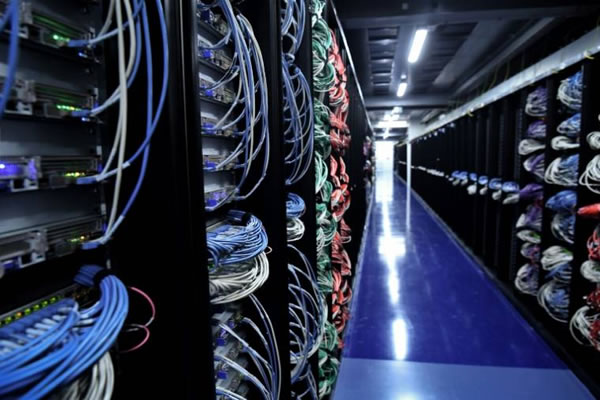
Facebook's server architecture is the basis of its success, consisting mainly of data centers, servers and networks. Facebook has multiple data centers in the United States, which are distributed in different geographical locations for load balancing and data redundancy. They adopt distributed computing methods to distribute user requests to multiple servers to ensure efficient data processing and transmission. On the server selection, Facebook tends to use custom hardware to maximize performance and reduce costs.
Efficient data center layout
Facebook’s data center layout in the United States has been carefully designed to optimize energy efficiency and reduce latency. Data centers are often located in cooler areas to reduce refrigeration costs and make the most of natural cooling. This layout not only reduces operating costs, but also improves the stability of the overall system. In addition, the high bandwidth connection between data centers ensures the speed and security of data transmission, allowing users to enjoy a smooth social experience.
Combination of custom hardware and software
In order to meet the needs of a large number of users, Facebook has developed custom hardware and software. Facebook's Open Compute Project (OCP) project is committed to sharing the design of high-performance servers to promote hardware innovation. Through open source hardware design, other companies can also benefit from these technological advancements. At the same time, Facebook adopts an efficient distributed computing framework and an optimized database system at the software level to ensure the speed and accuracy of data processing.
Load balancing and failure recovery mechanism
In server architecture, load balancing is the key to ensuring high system availability. Facebook uses multi-layer load balancing technology to intelligently allocate user requests to different servers, thus avoiding single point of failure. At the same time, Facebook has also established a powerful failure recovery mechanism. When a certain server fails, the system can quickly switch to the backup server to ensure the continuity and stability of the service.
Advantages of global content distribution networks
Facebook has built a huge content distribution network (CDN) worldwide, quickly distributing user-generated content to the server closest to users. This strategy not only improves content loading speed, but also reduces latency, which significantly improves the user experience. With the support of global CDN, Facebook can ensure that users can enjoy a smooth operating experience no matter where they are.
Security and data privacy protection
Against the backdrop of increasing importance of information security today, Facebook has also strengthened security and data privacy protection in its server architecture. Facebook ensures the security of user data through multi-layered network security measures, including firewalls, intrusion detection systems and data encryption technology. In addition, regular security audits and vulnerability scanning are also constantly enhancing the security protection capabilities of the server, providing users with a safe use environment.
Future Outlook and Technological Innovation
With the continuous development of technology, Facebook is also constantly exploring new architecture and performance optimization solutions. In the future, artificial intelligence and machine learning technologies will play a greater role in server management and performance optimization, helping Facebook further improve the intelligence level and operational efficiency of the system. At the same time, with the popularization of 5G technology, Facebook will also usher in a new leap in data transmission and processing capabilities.
Summary and suggestions
Understanding the architecture and performance advantages of Facebook servers in the United States will not only allow us to better understand the operating model of this technology giant, but also provide reference for other companies. When building your own server architecture, it is recommended to pay attention to the combination of custom hardware and software, load balancing technology, and security guarantees. Through reasonable architectural design and technological innovation, enterprises can achieve more efficient and stable services and improve user experience.
- Latest articles
- Why Do E-commerce And Video Platforms Need Japanese Native IP Websites To Ensure A Good Experience?
- Survival Strategies And Differentiated Service Explorations For Small And Medium-sized Vendors In The U.S. Server Hosting Industry
- How To Quickly Raise The Entry-level Salary Tier Of Hong Kong IDC Data Centers Through Certificates And Project Experience
- A Practical Guide To Comparing Malaysian Cloud Server Price Lists For Different Models And Bandwidth Options
- Where To Buy Taiwan Native IPs With Legal And Compliant Buying Guides
- Which Cloud Server In Vietnam Is A Good Case, Sharing Best Practices And Implementation Experiences Across Different Industries
- Gaming Industry Special Edition: Thailand Acceleration Server Rankings And Player Experience Report
- IP Reputation And Blacklist Risk Management When Choosing Hong Kong Multi-IP Server Hosting
- How Cross-border Developers Can Choose A German VPS Hosting Solution That Is Compliant And Supports GDPR
- In-depth Analysis Of The Pros And Cons Of Hong Kong Server CN2 And A Guide For Small And Medium-sized Enterprises To Buy
- Popular tags
-

How To Choose A Suitable Node To Deploy The American Station Group Proxy Ip Server To Achieve High Availability
this article introduces how to choose suitable nodes to deploy the us station group proxy ip server to achieve high availability, covering key points such as node type, geographical location, bandwidth concurrency, disaster recovery switching, monitoring and security compliance, etc., to help the engineering and operation and maintenance teams make technical decisions. -
Choose Partners With A Stable Supply Chain. Which US Server Hosting Providers Can Ensure Long-term Operation And Maintenance?
How to choose a server hosting provider with a stable supply chain in the United States to ensure long-term operations? This article provides professional advice on aspects such as supply chain resilience, hardware lifecycle management, network and power redundancy, compliance, and service level agreements, to help businesses reduce operational risks. -
Benefits And Applicable Scenarios Of Renting American High-defense Servers
Deeply explore the benefits and applicable scenarios of renting American high-defense servers to help you choose the right network protection solution.